Across Europe and the United States, sustainability policy is entering a more hesitant phase. Several governments have delayed or softened climate targets, and companies could be forgiven for matching that tempo. Yet Nordic companies are moving in the opposite direction — continuing to advance climate and sustainability work even as regulatory momentum cools.
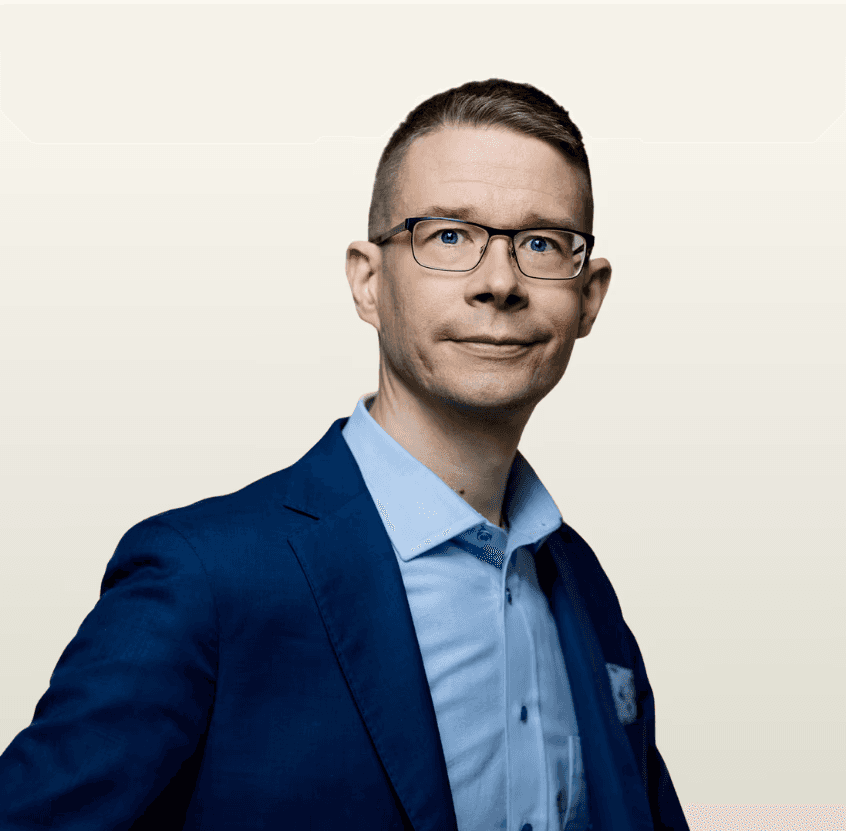
This is the throughline from our conversations with gold miner Endomines’ Chief Sustainability Officer Hanne Mäkelä—one of the few in Finland dedicated solely to that role—and Kimmo Lipponen, CEO of FIBS, the largest corporate responsibility network in the Nordic countries. Both CSR experts describe companies pressing ahead because the business case is strong, not because regulation demands it.
Regulation retreats, but companies don’t
The EU has signaled a substantial shift in sustainability reporting. Under the proposed Omnibus I Package, policymakers have discussed exempting up to 80% of companies originally covered by the Corporate Sustainability Reporting Directive. The reform would dramatically narrow the scope of mandatory ESG reporting — a notable retreat from the EU’s original intent (ESG Today, 2025).
At the same time, the ESG ratings industry continues to face questions about transparency and consistency. Ratings agencies have been criticized for methodological opacity and potential conflicts of interest (Financial Times, 2025).
Despite this, Nordic companies are showing little sign of slowing down. Mäkelä noted: “I haven’t really noticed companies backing down… companies with a strategic approach to sustainability continue on the science-based track and stick to their commitments.”
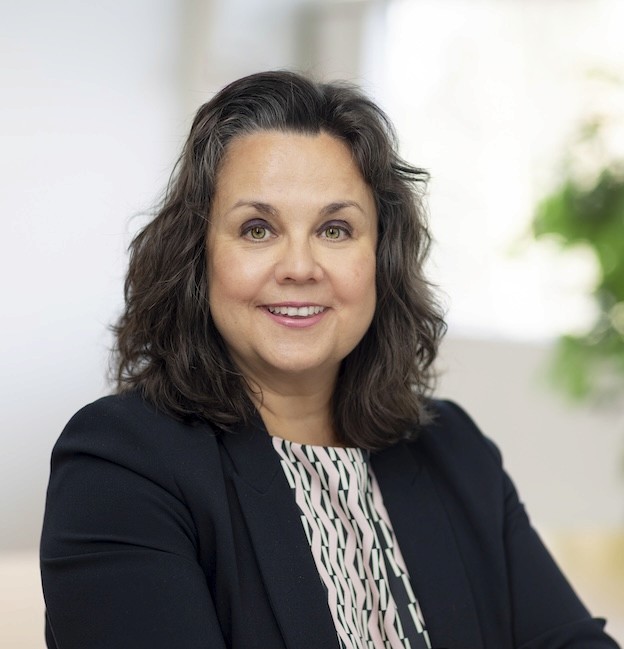
Hanne Mäkelä, CSO at Endomines.
Lipponen sees the same trend. “We don't see companies backtracking… companies are very aware of the business implications of climate change.”
Even in the U.S. — where national policy has fluctuated — Lipponen points out that climate-related investments remain resilient. “The investments in green transition are still growing.”
Data from Nordea supports the two experts. Nordic companies continue to perform strongly in ESG assessments, even amid macroeconomic volatility (Nordea, 2025). Investors increasingly reward companies with transparent sustainability governance, consistent transition plans, and credible science-based targets, the report adds.
For Nordic companies, ESG has become structural rather than reactive. As Mäkelä put it: “It’s not about what governments require. It's about what we want to do and how we see business needs to be done nowadays in order to have the license to operate.”
Governance matters more than job titles
Although ESG integration is progressing, organizations differ in how they formalize the work. Finland has fewer standalone CSOs than its neighbors, but both interviewees emphasize that the real driver is governance, not titles.
Mäkelä argues that when sustainability is bundled under communications, meaningful action suffers. “The risk in divided roles is that reporting guides the process… impactful actions get buried under daily business.”
At Endomines, sustainability spans multiple layers:
an ESG committee linking the board and management,
monthly follow-up at the management team level,
cross-functional working groups engaging all business units.
She highlights that local community engagement is a core part of governance: “The most important stakeholder group is the local community with whom we interact constantly — providing information about our activities and listening to their concerns, hopes and wishes.”
The company also collaborates with academic and research institutions, specialized technology companies, and innovation networks in Northern Karelia and nationally, embedding sustainability into broader ecosystems.
Is the answer more CSOs — or fewer?
According to Listeds data, Mäkelä is among the few Finnish CSOs whose role is dedicated to sustainability, rather than adding communications or other executive functions.
Should Finland have more standalone CSOs? Mäkelä believes the answer depends on ambition, but she is clear about the benefits of dedicated leadership. “When sustainability is a dedicated person’s responsibility… it’s more about making things happen, leading actions, and then the reporting comes after that.”
By contrast, when sustainability is combined with other executive duties, reporting often dominates. “It is quite common to have communications and sustainability in the same role… but at least in my opinion, it reflects that sustainability is a continuation of reporting.”
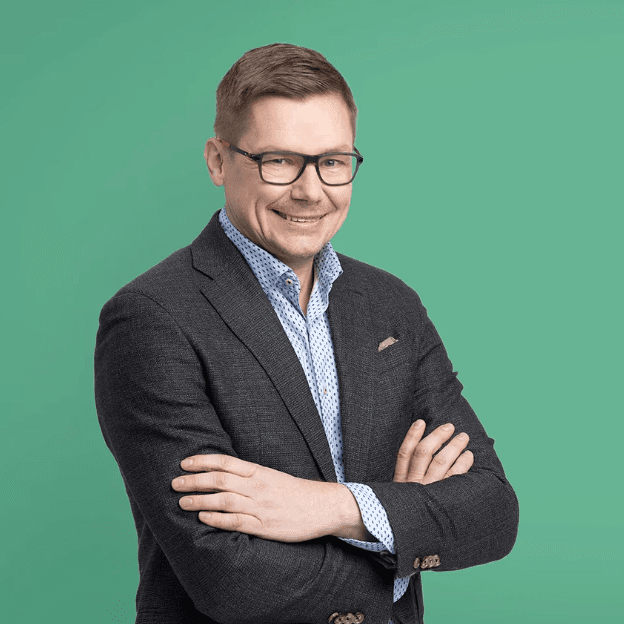
Kimmo Lipponen, CEO of FIBS.
Lipponen points out that integration beats titles. “Most big companies do have chief sustainability officers or similar roles, but the title is not the most important thing.” What matters, he says, is that “sustainability is on the non-executive board agenda, the executive board agenda, and the strategic agenda of the company.”
He notes that hybrid roles — such as chief strategy and sustainability officer — may even better reflect the strategic nature of sustainability today.
Measurement: the hardest problem no one has solved yet
Even among committed companies, impact measurement remains the biggest unresolved challenge.
Lipponen put it bluntly: “Whoever solves impact measurement probably deserves a Nobel Prize.” He notes that while CSRD’s ESRS standards provide structure, they do not offer a universal method for calculating actual environmental or social impact. The result is a landscape where companies are expected to measure deeply — but without consensus on how.
The wider context supports his concern. Analysts observe that even advanced companies struggle to convert sustainability activity into tangible, comparable, outcome-level data (Skadden, 2025).
One promising Finnish innovation Lipponen highlights is the Upright Project, an AI-driven model that calculates a company’s net positive and negative impacts across its entire value chain (Upright Project, 2025). He adds that while many companies are quick to report progress, stakeholders should always ask what metric that progress is actually based on.
Mäkelä acknowledged she had not yet examined Endomines’ Upright score — a negative 101 percent, placing it in a similar range with other mining companies and heavy emitters such as Saudi Aramco and Exxon Mobil — but said she was not surprised that mining companies often score poorly in such models. “I understand that our industry probably has quite low scores due to the nature of our business… There are definitely things we can improve, and we should improve.”
But she also emphasized a nuance these models often miss: mining in Finland is not the same as mining in jurisdictions with weaker standards. “It is good to mine metals and minerals in Finland sustainably instead of in countries where standards may not be as high,” she said. “You cannot do mining without impacts, but you can minimize these impacts.”
For Endomines, impact measurement therefore extends beyond traditional environmental metrics. “Local employment, use of local services, supporting local initiatives, and tax contribution to local communities are important indicators that should be considered as well.”
These indicators, she says, feed directly into the company’s social license to operate. “For us, the most important stakeholder group is the local community… we interact constantly, providing information about our activities and listening to their concerns, hopes and wishes.”
She also highlights that measurement is not only about environmental effects but about how well a company communicates them: “Some global sustainability metrics are very complex… we focus on metrics understandable also for our local stakeholders.”
And while mining will always be scrutinized for its environmental footprint, Endomines is working to reduce its impact using operational metrics that locals can see and verify.
Water management is the clearest example. “We are constantly developing new metrics… water remains the most important topic,” she said. The company, for example, aims for a closed-loop system that reuses water rather than extracting new water from the environment.
Companies move ahead because the business case is now unavoidable
Why do Nordic companies continue investing even as regulation softens? Because the financial, physical, and supply-chain risks of climate change are becoming clearer. Lipponen emphasized that companies are not in denial about the “business implications climate change has.”
Mäkelä summarized the sentiment common among Nordic leaders: “It’s about how we want to act… how we want to be proud of what we have done.”
Political cycles may shift, but sustainability is becoming embedded in Nordic business strategy. For many companies, ESG is no longer a compliance exercise — it is risk management, value creation, and stakeholder trust.
References
ESG Today. (2025). EU to exempt 80% of companies from CSRD sustainability reporting requirements. ESG Today.
Financial Times. (2025). ESG ratings face transparency questions. Financial Times.
Upright Project. (2025). Net impact model overview. Upright Project.
Skadden. (2025). ESG in 2025 – A midyear review. Skadden, Arps, Slate, Meagher & Flom LLP.
Nordea. (2025). How are Nordic companies performing on ESG?. Nordea Bank Abp.
Deloitte. (2025). EU 2025 sustainability regulation outlook. Deloitte Insights.